山東工程人警惕!橋架敷線踩這坑必返工,監(jiān)理當場叫停,國標早有明確規(guī)定
山東工程人警惕!橋架敷線踩這坑必返工,監(jiān)理當場叫停,國標早有明確規(guī)定
Shandong engineers are vigilant! The cable tray laying must be reworked if this pit is stepped on, and the supervisor stopped it on the spot. The national standard has long had clear regulations
在山東做建筑、電氣工程的朋友,大概率見過這樣的場景:電纜橋架敷設完工后,監(jiān)理到場驗收,一眼就發(fā)現(xiàn)問題,當場要求停工返工——配電箱、主電纜和消防信號線纜,一股腦全鋪在同一個橋架里,沒有做任何隔離處理。別覺得這是“小事”,這種違規(guī)操作不僅通不過驗收,還會留下嚴重的用電隱患,后期返工既費錢又誤工。今天就用大白話+實打?qū)嵉臄?shù)據(jù),結合國標要求,給山東工程人、采購方嘮透山東電纜橋架敷設的核心禁忌,看完再也不踩這種低級坑。
Friends who work in construction and electrical engineering in Shandong have probably seen such a scene: after the cable tray is laid, the supervisor arrives for inspection and immediately discovers the problem, requiring work to be stopped and reworked - the distribution box, main cable, and fire signal cable are all laid in the same tray without any isolation treatment. Don't think of this as a 'small matter'. This kind of illegal operation not only fails the acceptance inspection, but also leaves serious electrical safety hazards. Rework in the later stage is both costly and time-consuming. Today, using plain language and concrete data, combined with national standard requirements, we will explain to Shandong engineers and purchasers the core taboos of cable tray laying in Shandong. After reading, we will never step on such low-level pitfalls again.
先給大家說個真實案例,也是山東本地工程常犯的錯:濟南某寫字樓電氣施工中,施工隊圖省事,將主電力電纜(380V)、配電箱連接線和消防信號線纜,共同敷設在同一個無隔離的槽式橋架內(nèi),總長度約80米,驗收時被監(jiān)理當場叫停,要求全部返工。返工不僅要重新拆除、分揀電纜,還要增設隔離措施或分橋架敷設,額外花費2.3萬元,工期延誤5天,得不償失。據(jù)山東建筑行業(yè)統(tǒng)計,每年因電纜橋架敷設違規(guī)導致的返工率達29%,其中不同電壓、不同用途電纜混敷的情況占比62%,是常見也容易被忽視的違規(guī)點。
First of all, let me give you a real case, which is also a common mistake in local engineering in Shandong: during the electrical construction of an office building in Jinan, the construction team tried to save time by laying the main power cable (380V), distribution box connection line, and fire signal cable together in the same non isolated trough bridge, with a total length of about 80 meters. However, during the acceptance inspection, they were stopped by the supervisor on the spot and required to rework all of them. Rework not only requires dismantling and sorting cables again, but also adding isolation measures or laying cable trays, which costs an additional 23000 yuan and delays the construction period by 5 days, which is not worth the loss. According to statistics from the construction industry in Shandong, the annual rework rate caused by violations of cable tray laying is 29%. Among them, the situation of mixing cables of different voltages and purposes accounts for 62%, which is the most common and easily overlooked violation point.
很多施工隊之所以犯這種錯,要么是圖省事、趕工期,要么是對規(guī)范不了解,覺得“只要能放下電纜,敷在一起沒關系”。可實際上,這種操作嚴重違反國標,還藏著極大的隱患。劃紅線:根據(jù)國標GB 51348-2019《民用建筑電氣設計標準》第8.5.13條明確規(guī)定,不同電壓、不同用途的電纜應分開鋪設,不應敷設在同一個橋架內(nèi),這是電纜橋架敷設的“鐵規(guī)矩”,山東所有建筑、工業(yè)工程都必須嚴格遵守。
Many construction teams make this mistake either to save time and meet deadlines, or because they are not familiar with the specifications and think that 'as long as the cables can be laid down and laid together, it's okay'. However, in reality, this operation seriously violates national standards and poses significant safety hazards. Key red line marking: According to Article 8.5.13 of the national standard GB 51348-2019 "Electrical Design Standards for Civil Buildings", cables of different voltages and purposes should be laid separately and should not be laid in the same cable tray. This is the "iron rule" for cable tray laying, and all buildings and industrial projects in Shandong must strictly comply with it.
可能有山東工程人會問,為啥不能敷在一起?核心原因有兩個,既關乎,也關乎設備正常運行。個原因,避免信號干擾,尤其是消防、弱電信號。主電纜是高壓電力電纜,運行時會產(chǎn)生強電磁干擾,而消防信號線纜、弱電線纜(比如監(jiān)控、通訊線纜)靈敏度極高,一旦被干擾,就會出現(xiàn)信號中斷、誤報等問題。比如山東某工廠曾因消防信號線纜與主電纜混敷,發(fā)生火災時消防報警系統(tǒng)失靈,延誤了救援時機,造成額外損失,這類案例在山東每年都會發(fā)生10余起。
Some Shandong engineers may ask, why can't they be applied together? There are two core reasons, which are related to both safety and the normal operation of the equipment. The first reason is to avoid signal interference, especially for fire and weak current signals. The main cable is a high-voltage power cable that generates strong electromagnetic interference during operation, while fire signal cables and weak current cables (such as monitoring and communication cables) have extremely high sensitivity. Once interfered, problems such as signal interruption and false alarms may occur. For example, a factory in Shandong once experienced a fire when the fire alarm system malfunctioned due to the mixing of fire signal cables and main cables, delaying the rescue opportunity and causing additional losses. Such cases occur more than 10 times a year in Shandong.
第二個原因,防范事故,降低隱患風險。不同電壓的電纜混敷,一旦其中一根電纜絕緣層破損,就會發(fā)生短路、漏電,甚引發(fā)火災;而消防信號線纜屬于應急保障線路,若與主電纜混敷,一旦主電纜出現(xiàn)故障,消防線纜也會被牽連損壞,火災時無法正常傳輸信號,后果不堪設想。據(jù)統(tǒng)計,山東因電纜混敷導致的電氣火災,占電纜相關火災的37%,其中80%都是因為未按國標要求分開敷設、未做隔離造成的。
The second reason is to prevent safety accidents and reduce hidden risks. Mixing cables of different voltages, once one of the insulation layers of the cable is damaged, short circuits, leakage, and even fires can occur; And the fire signal cable belongs to the emergency support line. If it is mixed with the main cable, once the main cable fails, the fire signal cable will also be damaged and cannot transmit signals normally during a fire, and the consequences will be unimaginable. According to statistics, electrical fires caused by mixed cable laying in Shandong account for 37% of cable related fires, of which 80% are caused by failure to separate and isolate cables according to national standards.
這里給山東工程人明確,哪些電纜不能混敷在同一個橋架內(nèi),對照自查不踩坑:一是高壓電纜(1kV以上)與低壓電纜(1kV以下),比如工廠的主電力電纜和辦公室的照明電纜;二是電力電纜與消防專用線纜,比如主電纜和消防信號、應急照明電纜,尤其要注意,即使加隔板,普通負荷與消防負荷的電纜也不建議同橋架敷設,火災時隔板無法完全保證消防線纜;三是電力電纜與弱電線纜,比如主電纜和網(wǎng)線、監(jiān)控線纜;四是向同一負荷供電的兩回路電源電纜,也需分開敷設。
Here, it is clear to Shandong engineers which cables must not be mixed and laid in the same cable tray, and self inspection should be conducted to avoid pitfalls: firstly, high-voltage cables (above 1kV) and low-voltage cables (below 1kV), such as the main power cables in factories and lighting cables in offices; Secondly, power cables and fire protection cables, such as main cables, fire signal cables, and emergency lighting cables, should be paid special attention to. Even if partitions are added, it is not recommended to lay cables for ordinary loads and fire loads on the same bridge, as partitions cannot fully guarantee the safety of fire protection cables during a fire; The third is power cables and weak current cables, such as main cables, network cables, and monitoring cables; The fourth is that the two circuit power cables that supply power to the same load also need to be laid separately.
結合山東工程常見場景,給大家說兩種正確的敷設方式,簡單好操作,還符合國標要求。種,分橋架敷設,這是穩(wěn)妥、常用的方式,占山東合規(guī)工程的78%。不同電壓、不同用途的電纜,分別敷設在獨立的橋架內(nèi),橋架之間的間距不小于0.5m,若有屏蔽蓋板,可縮小0.3m,既能徹底避免干擾,又能降低隱患,比如濟南高新區(qū)的工廠、遙墻國際機場的布線,大多采用這種方式。
Based on common scenarios in Shandong engineering, let me explain two correct laying methods that are simple and easy to operate, and also comply with national standards. The first method is to lay cable trays separately, which is the most secure and commonly used approach, accounting for 78% of compliance projects in Shandong. Cables of different voltages and purposes are laid separately in independent cable trays, with a spacing of no less than 0.5m between trays. If there is a shielding cover plate, it can be reduced to 0.3m, which can completely avoid interference and reduce safety hazards. For example, this method is mostly used for wiring in factories in Jinan High tech Zone and remote international airports.
第二種,同橋架但加專用隔離板,僅適用于受場地限制、無法分橋架敷設的場景,且嚴禁用于消防線纜與普通電力電纜的敷設。隔離板需采用防火、絕緣材質(zhì),厚度≥1.5mm,高度與橋架高度一致,能將橋架內(nèi)部徹底分隔成獨立空間,每一個空間僅敷設一種類型的電纜,同時電纜在橋架內(nèi)的填充率需符合要求,電力電纜不超過40%,控制電纜不超過50%,避免因電纜過密導致散熱不良。這種方式比分橋架敷設節(jié)省成本30%左右,但后期檢修難度稍大,需做好標記,方便區(qū)分電纜類型。
The second option is to use the same cable tray but with a dedicated isolation board, which is only suitable for scenarios where it is limited by the site and cannot be laid separately. It is strictly prohibited to use it for laying fire cables and ordinary power cables. The isolation board should be made of fire-resistant and insulating materials, with a thickness of ≥ 1.5mm and a height consistent with the height of the bridge. It should be able to completely separate the interior of the bridge into independent spaces, with only one type of cable laid in each space. At the same time, the filling rate of cables in the bridge should meet the requirements, with no more than 40% for power cables and no more than 50% for control cables, to avoid poor heat dissipation caused by overly dense cables. This method saves about 30% of the cost of laying cable trays, but it is slightly more difficult to maintain in the later stage and requires proper labeling to facilitate the differentiation of cable types.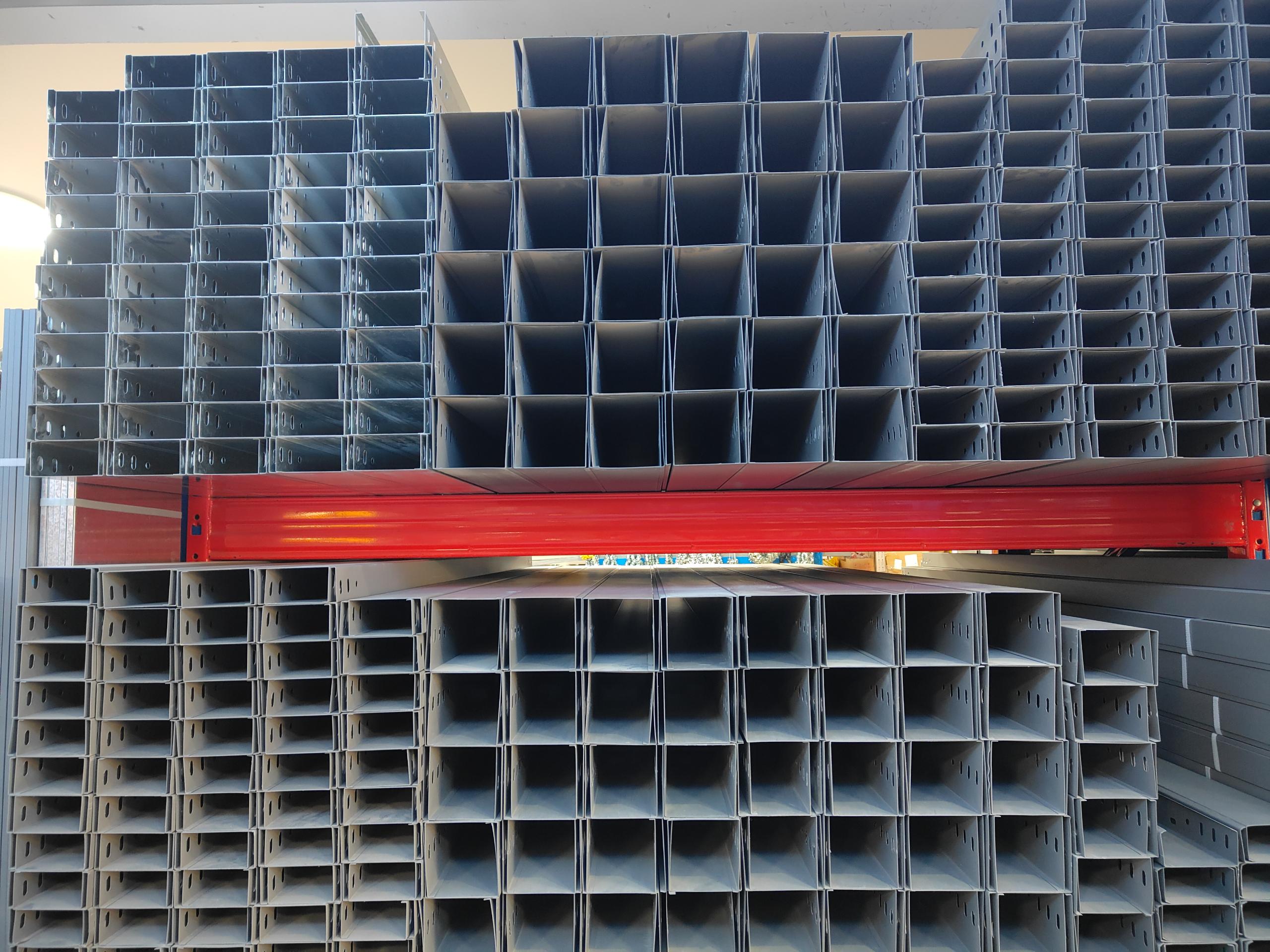
補充一組山東本地實用數(shù)據(jù),幫大家重視這個問題:山東電纜橋架敷設違規(guī),不僅會被監(jiān)理要求返工,若違規(guī)驗收通過后被抽查發(fā)現(xiàn),還會面臨5000-5萬元的罰款,情節(jié)嚴重的會被責令停工整改;返工成本平均每米35-80元,80米的布線返工,僅人工+材料成本就超2萬元,還會延誤工期,影響工程回款。另外,合規(guī)敷設的電纜橋架,后期電纜故障率可降低82%,檢修效率提升60%,長期來看更省心、更省錢。
Add a set of local practical data in Shandong to help everyone pay attention to this issue: if the cable tray laying in Shandong violates regulations, not only will it be required to rework by the supervisor, but if it is found through spot checks after passing the inspection, it will also face a fine of 50-50000 yuan, and those with serious circumstances will be ordered to stop work for rectification; The average cost of rework is 35-80 yuan per meter. For 80 meters of wiring rework, the labor and material costs alone exceed 20000 yuan, which will also delay the construction period and affect project payment. In addition, compliant cable trays can reduce cable failure rates by 82% and increase maintenance efficiency by 60% in the later stage, making them more worry free and cost-effective in the long run.
總結來說,山東電纜橋架敷設,看似簡單,實則有嚴格的國標要求,不同電壓、不同用途的電纜混敷,不是“小事”,而是會導致返工、罰款、隱患的“大坑”。不管是施工隊還是采購方,都別圖省事、省成本,忽視規(guī)范要求。遵循國標GB 51348-2019第8.5.13條規(guī)定,要么分橋架敷設,要么同橋架加合規(guī)隔離板(不含消防線纜場景),才能確保工程合規(guī)、用電。希望這篇科普能幫到山東的工程人們,避開返工坑、坑,讓工程順利推進,覺得有用的話,別忘了點贊轉發(fā),提醒身邊更多同行~
In summary, the installation of cable trays in Shandong may seem simple, but in reality there are strict national standards. Mixing cables of different voltages and purposes is not a "small matter", but a "big hole" that can lead to rework, fines, and safety hazards. Whether it's the construction team or the procurement party, don't try to save time and costs, and ignore regulatory requirements. According to the provisions of Article 8.5.13 of the national standard GB 51348-2019, either separate cable trays should be laid or compliant isolation plates should be added to the cable trays (excluding fire cable scenarios) to ensure project compliance and electrical safety. I hope this science popularization can help engineers in Shandong avoid rework and safety pitfalls, and ensure the smooth progress of the project. If you find it useful, don't forget to like and share it, reminding more colleagues around you
下一篇:
相關文章 / Recommended news
- 濟南廠房福音!大跨距橋架破解3大痛點,加強筋加,安裝省一半錢
- 山東工程人警惕!橋架敷線踩這坑必返工,監(jiān)理當場叫停,國標早有明確規(guī)定
- 濟南人避坑!橋架≠線槽,90%工程人都搞混,一字之差差千里
- 避坑指南!山東電纜橋架規(guī)格別瞎選,偏大浪費偏小隱患大,國標早就定好了
- 濟南人必看!鋁合金電纜橋架選對厚度,耐用又省心,90%的人選錯踩坑
- 山東人必看!電纜橋架不是“鐵架子”,藏著建筑用電的密碼,90%的人都不懂
- 800kg/m抗壓!濟南電纜橋架,破解3大工程痛點,工期省30%
- 3種類型+98%散熱!山東電纜橋架,選對不踩坑,布線效率翻倍
- 2類核心支架!濟南電纜橋架,抗震承重雙達標
- 別再混淆!山東電纜橋架vs線槽,6大核心區(qū)別一文分清
 陽極氧化鋁合金橋架
 托盤式電纜橋架
- 梯式電纜橋架
 梯式不銹鋼電纜橋架
 深灰色金屬防火電纜橋架